100 Hour Yoga TTC Program Highlights
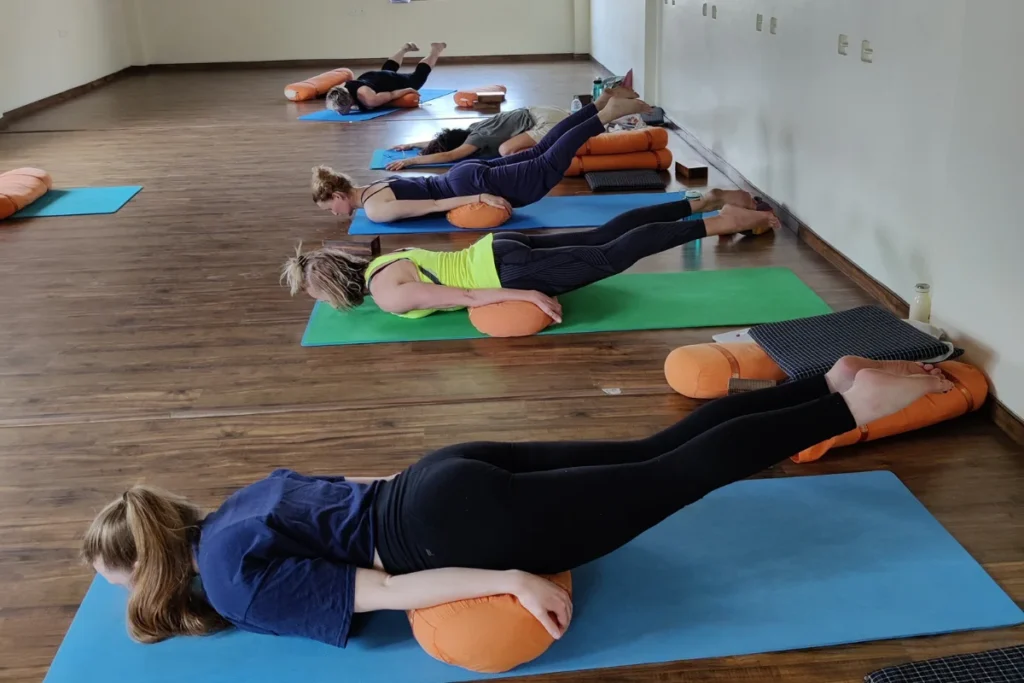
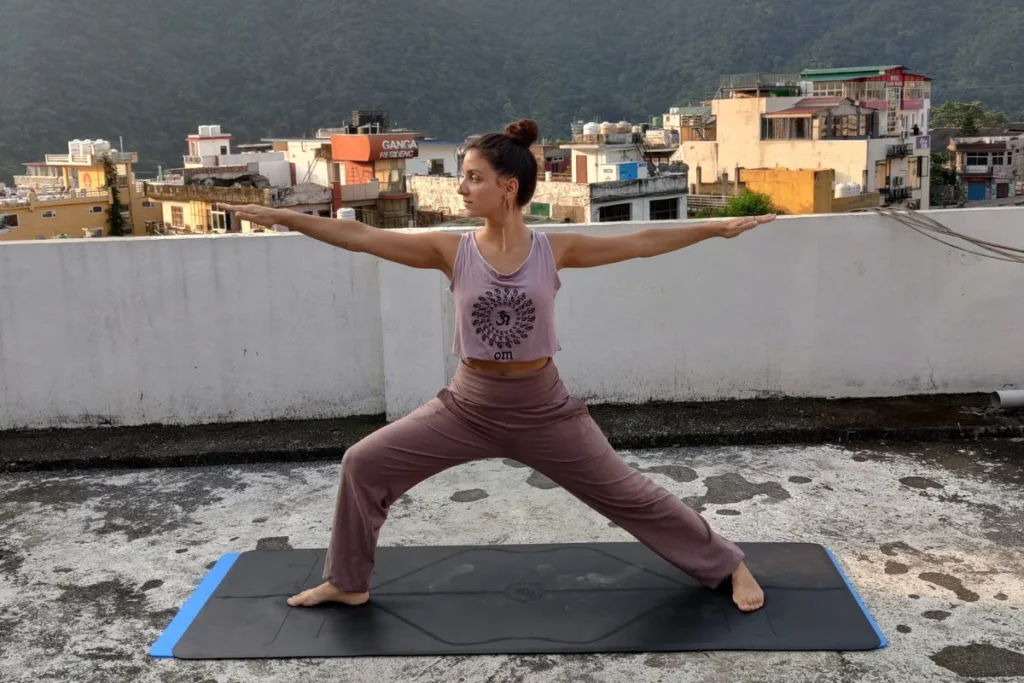
The focus in Hatha is to balance the flow of Prana (life force) in Ida and Pingala Nadi (energy lines). They represent the duality present in every human body. We can create balance by purifying our body through yoga practices like an asana (postures) practice. There are many ways to practice Yoga, but one of the fastest ways to experience this union and purification is through our body. That’s why we practice asanas. Our body is a vessel towards experiencing all of our spiritual gifts, that has been located inside of us all along. Performing asanas is about much more than just exercising, but you cannot argue with the endless benefits for our physical wellbeing. Traditional Hatha Yoga is a practice that will make you feel light, strong and healthy. Your muscles will feel stretched, joints will be painless, internal organs will get a massage and your mind will feel clear. Through the physical body we are transforming our whole being with Hatha Yoga.
This style of Yoga came to be because of Ashtanga Vinyasa, which is a stricter form of Yoga. Vinyasa Yoga is a more flexible Yoga style, where the practitioner or teacher chooses the postures and flow practiced. Vinyasa is a fast-paced yoga flow where you often practice one posture per breath, depending on the intensity of the practice. Practicing Vinyasa Yoga is good for your health both physically and mentally. Since the practice is a flow, it is very useful to know the proper alignment of postures, to prevent injuries while moving from one asana to the next. When a practitioner becomes familiar with a vinyasa practice, it feels like meditating while moving.
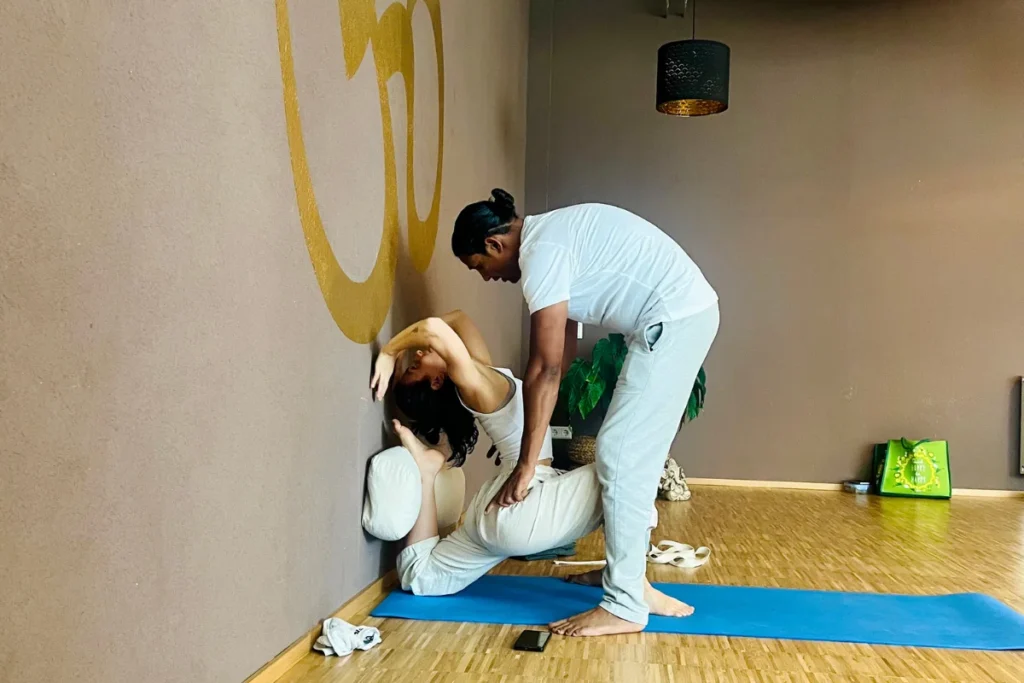
An alignment-oriented class consists of demonstrations on proper posture alignment and checking if the students are properly aligned in the posture. If students are misaligned you will learn how to assist them gently into alignment, first using your hands and eventually your own body. Alignment in a posture is very important. If the posture is not performed properly, the practitioner does not experience the full benefits. It is important to first recognize that the practitioner is not aligned properly (not performing the right pose), then it is important to assist him/her into the proper position.
The practice of Pranayama is not simply inhaling and exhaling. It has an impact on body, mind, emotion, and psyche. On a physical level, the practice of Pranayama increases vitality within the body, improves the functions of the organs and the endocrine, respiratory, circulatory and digestive systems. It increases the supply of oxygen within the blood, purifies the blood, and hence influences every cell. On the mental level, breathing forms a bridge between the conscious and unconscious areas of the mind. Deep rhythmic breathing creates a state of relaxation. These breathing techniques induce an altered state of consciousness. At the psychic level, Pranayama purifies the energy channels and increases the energy flow within the body. Once one learns to control Prana, one can manipulate it for self-evolution.
There are many useful topics in anatomy to touch upon, when being interested in Yoga. Gaining knowledge about the physical body will help you gain a greater understanding of the endless benefits of Yoga. Examples of topics to study deeper are types of muscles, joints and bones, muscular system mechanics, muscle development and growth, muscular system disorders, physiology of the heart, blood vessels, circulation, blood pressure and cardiovascular system disorders and its impact on the body
In the relationship between the mind and the body, the body must be first controlled through self-discipline and purified by various means like kriyas and asanas. A good level of overall health and psychological integration must be attained before the deeper aspects of Yoga can be pursued. Humans have all sorts of addictions and obsessions and these preclude the attainment of tranquil abiding (meditation). Through restraint (Yama) such as abstaining from intoxicants and careful attention to one’s actions of body, speech and mind, the human being becomes fit to practice meditation
In the West, we tend to focus on the third limb, asana. This is a good place to start because, even if it is initially approached as exercise, the power, effects, and struggles encountered while learning asana soon show the practitioner that Yoga is more than simply performing physical postures. Hatha Yoga, for example, places asana as “the key to developing the body’s potential so that it can withstand the onslaught of transcendental realization.” Hatha Yoga is described as being a preparation for Raja Yoga. There are only three sutras (phrases from an ancient yoga text) that offer instruction on the practice of asana and although they sound simple, they may take a lifetime to master. Patanjali (the writer of the sutras) gives much more detail in relation to the Yama and Nyama. By incorporating these two limbs into asana-focused classes, it is possible to give the student a more holistic approach to Yoga, as well as equipping students with information they can take off their mats and into their daily lives.
In a self-practice you can really listen to your own body and mind. With the knowledge you have gained about asanas, the mind and body, you can focus on what is needed for you to feel good in your practice and respond to your needs by trusting your intuition. You will strengthen the relationship with yourself and remember your wisdom and knowledge learned in Pranayama, Asana Practice, anatomy and philosophy.
Examples of mantras to chant are the ‘Swasti Mantra’ which means ‘may all be happy. May all be free from Diseases. May all enjoy prosperity. May none experience sorrow.’ Another example is the ‘Patanjali Mantra’ which means ‘I salute the exalted Sage Patanjali who removes impurities of mind through Yoga Sutra (book), defects of language by Vyakarana Sastra and impurities of the body by ayurveda Sastra’.
These powerful techniques should never be learned from books or taught by inexperienced people. According to the tradition, only those instructed by a guru may teach other people Kriyas. It is essential to be personally instructed as to how and when to perform the Shatkarmas (six actions of purification), according to individual limitations and needs.
Becoming aware of Karma and life’s actions is a part of Yoga. Karma Yoga means to understand one’s duty and follow it (Yoga of action). Karma Yoga is described in the ancient book ‘The Bhagavad Gita’ which proposes that that true enlightenment comes from growing beyond identification with the temporal ego, the ‘false self’, the ephemeral world, so that one identifies with the truth of the immortal self, the absolute soul or Atman. Through detachment from the material sense of ego, the Yogi, or follower of a particular path of Yoga, is able to transcend his/her illusory mortality and attachment to the material world and enter the realm of the Supreme. This does not mean that the physical world must be forgotten or neglected. Rather, one’s life on Earth must be lived in accordance with greater laws and truths; one must embrace one’s temporal duties whilst remaining mindful of timeless reality, acting for the sake of service without consideration for the results thereof. Such a life would naturally lead towards stability, happiness and, ultimately, enlightenment.